
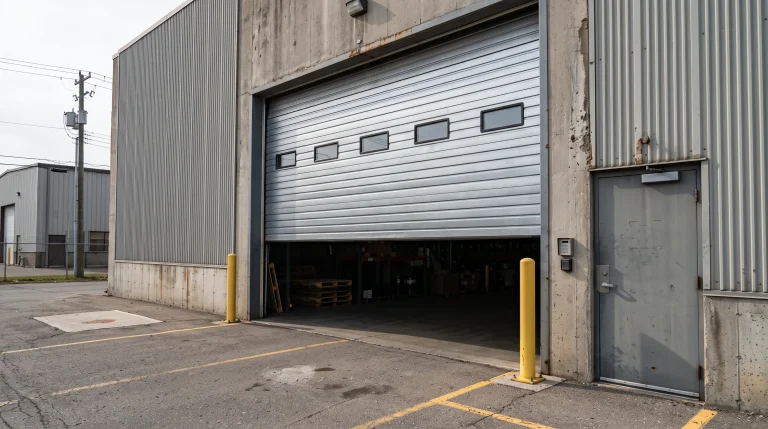
Commercial garage door costs vary widely because price is driven by size, material, insulation, automation, and installation complexity, not a single flat rate. A small standard steel door on a simple opening sits at the lower end of the range, while a large, insulated, high-speed, or fire-rated door with automated controls sits well above it. Knowing the six factors below is the fastest way to understand where your project will land before you request a quote.
Business owners often start this process by asking for a single number, only to find that two buildings with similarly sized commercial garage door openings can land at very different price points once material, insulation, and installation conditions are factored in. Understanding what actually moves the needle on price makes it easier to compare quotes, avoid surprise line items, and decide where it makes sense to spend more versus where a standard option will do the job just as well.
Key Takeaways
- Door size and opening height are among the biggest drivers of base cost.
- Material choice can shift price significantly, especially for fiberglass or wood composite.
- Insulation adds cost upfront and can help reduce energy spend over time, though results vary by building and usage.
- Automation and access controls add a meaningful line item most owners underestimate.
- Fire rating and code compliance can raise cost on top of standard construction.
- Installation complexity, including structural modifications and permit requirements, affects the final invoice as much as the door itself.
Comparison Table: What Moves the Price Up or Down
|
Factor |
Raises Cost |
Lowers Cost |
|
Size |
Large openings, tall clearance |
Standard-size bays |
|
Material |
Fiberglass, wood composite |
Standard-gauge steel |
|
Insulation |
Insulated panels |
Non-insulated panels |
|
Automation |
Commercial-grade openers, access controls |
Manual or basic operators |
|
Fire Rating |
Certified fire-rated assemblies |
Non-rated standard doors |
|
Installation |
Structural changes, difficult access |
Straightforward swap into existing opening |
Every one of these six factors interacts with the others, which is part of why a real number always comes from measuring your specific opening rather than a general estimate pulled from an online calculator. A door that looks inexpensive on paper can end up costing more once installation complexity or a required fire rating is factored in, and the reverse is just as common.
1. Door Size and Opening Height
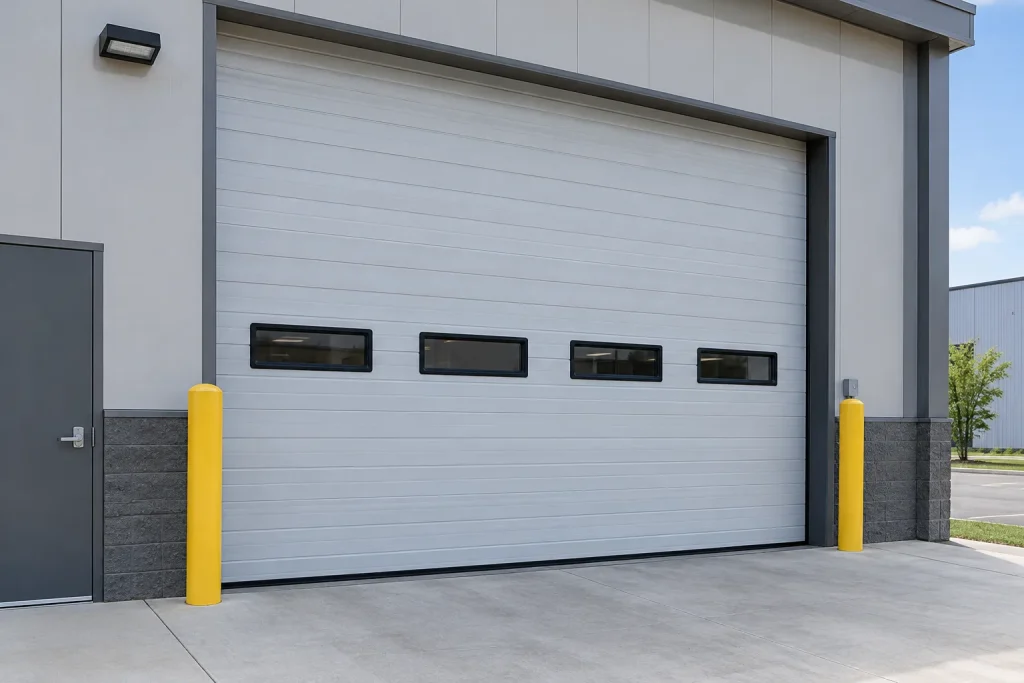
Larger openings need more material, heavier-duty tracks, and stronger springs or operators to manage the added weight, which raises cost at every stage of the project. A door that’s both wide and tall compounds this further, since both the panel material and the counterbalance system have to scale up together.
How Much Does Door Size Affect Commercial Garage Door Pricing?
As general guidance, cost tends to scale with square footage more predictably than almost any other factor, so an accurate measurement of the opening is usually the first step in any real quote.
Two doors that look similar in a catalog photo can price out very differently once actual dimensions are factored in, which is why rough estimates based on “a standard commercial door” rarely hold up once measurements are taken.
Oversized or nonstandard openings can also require custom fabrication rather than off-the-shelf panels, which adds both cost and lead time to a project.
Door type also affects this: read What Are the Different Types of Commercial Garage Doors? 6 Options Compared to see how category and size interact.
2. Material Choice
Steel is generally a cost-effective material for commercial use, while fiberglass and wood composite carry a higher price for improved appearance or corrosion resistance.
Read this tradeoff in full in Which Material Is Best for a Commercial Garage Door? 5 Options Ranked for Durability.
Does Material Choice Change the Long-Term Cost, Not Just the Upfront Price?
Often, yes. A higher upfront material cost can sometimes offset lower maintenance spend over 15 to 20 years, so total cost of ownership matters alongside the sticker price, though the actual math depends on the specific building and how it’s used.
A business planning to hold a property long-term has different math than one optimizing for the lowest possible install cost on a shorter-term lease.
3. Insulation
Insulated panels add cost to the door itself, but for climate-controlled or temperature-sensitive spaces, the energy savings over time can help offset that added cost, though results depend on the building, usage, climate, and door application. Insulation is typically priced by R-value, with higher-rated panels costing more but delivering better performance in extreme heat or cold.
Is Insulation Worth the Added Upfront Cost?
For cold storage, food service, or other conditioned spaces, insulation is often one of the upgrades most likely to help offset its own cost through lower utility bills over time. That said, whether and how quickly it does depends on the specific building, how the space is used, local climate, and the door’s application, so it isn’t a guaranteed payback in every case.
For uninsulated exterior-only bays with no climate control behind them, the payback case is weaker, which is one reason this decision benefits from being made based on how the space is actually used rather than as a default upgrade.
4. Automation and Access Controls
Openers, keypads, remote access systems, and safety sensors all add to the total project cost, and pricing scales with the size and duty cycle of the door being automated. Multi-door facilities often add centralized access control on top of individual openers, which is a separate cost line worth budgeting for early.
What Do Automated Controls Add to a Commercial Garage Door Project?
Heavier or larger doors need commercial-grade operators rated for continuous use, which cost more than lighter-duty residential-style openers.
That price difference reflects real engineering and testing requirements, not just brand markup.
Multi-tenant or multi-bay properties should also budget for integration costs if automated doors need to connect with an existing security or building management system, since that kind of integration work is typically quoted separately from the door and opener themselves.
According to the ULSE insight on automatic garage door standards, automated door systems are held to specific safety standards covering entrapment protection and control requirements, which is one reason commercial-grade automation carries a higher price than consumer-grade equipment.
5. Fire Rating and Code Compliance
Fire-rated doors require specific construction and certified hardware to meet a designated time rating, which adds cost over a standard non-rated door of the same size. The certification process itself, testing the full assembly rather than just individual components, is part of what drives the price difference.
Why Do Fire-Rated Doors Cost More Than Standard Commercial Doors?
The certified components, testing, and labeling required for a fire rating raise material and compliance costs, but skipping this requirement where code mandates it isn’t a shortcut worth taking.
A door that fails a fire inspection after installation typically costs more to correct than it would have to spec correctly from the start, on top of the compliance risk in the meantime.
6. Installation Complexity
Structural modifications, electrical work for automation, and difficult access all add labor cost beyond the door itself. A straightforward swap into an existing, code-compliant opening generally costs less than a new opening or a structural retrofit. New openings and structural changes also often trigger permit requirements, which vary depending on the specific project and local jurisdiction.
What Installation Factors Raise the Final Cost Beyond the Door Price?
Site conditions matter as much as the door spec.
An opening that needs reframing, new electrical runs, or difficult crane access will typically cost more in labor than the material difference between door types.
Bob Vila’s guide to choosing a garage door is a useful independent reference for understanding how installation variables factor into an overall quote.
Older buildings in particular tend to carry more of these hidden costs, since original openings weren’t always built to current code or to the dimensions of modern commercial doors.
Cost is just one of eight factors worth weighing; read How Do You Choose the Right Commercial Garage Door? 8 Things to Consider Before You Buy for the complete framework.
Know These 6 Factors Before a Single Quote Hits Your Inbox
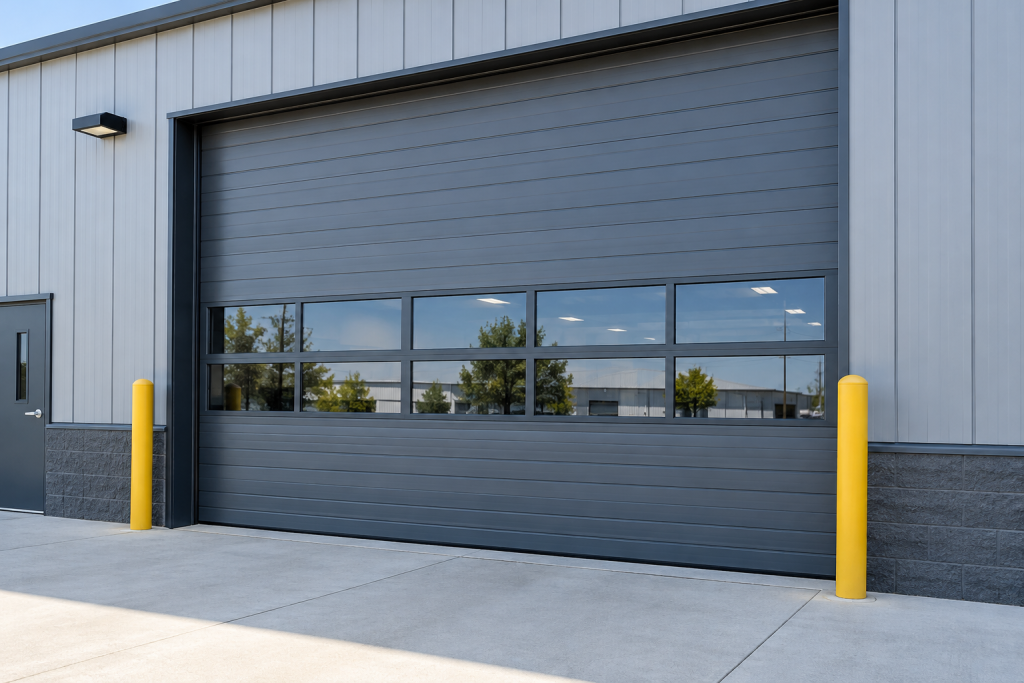
The clearest way to avoid an inaccurate estimate is to treat these six factors as a checklist before requesting quotes, so you know which ones apply to your building before a number ever gets attached to the project. Owners who walk into the quoting process with this context tend to get more accurate numbers faster, and fewer surprises once the work actually begins.
R&S Overhead Doors and Gates of Sacramento, Inc. provides quotes based on your exact opening and needs, with a straight answer instead of a rough range. Contact us today or give us a call to talk through pricing and scheduling for your project.
Frequently Asked Questions
Does a bigger door always cost more?
In most cases, yes. Size and opening height are consistently among the strongest drivers of base cost across most projects.
Is it cheaper to repair an old door or replace it?
It depends on the door’s age, condition, and how the repair cost compares to a full replacement. Frequent repairs on an aging door often signal it’s time to compare replacement pricing.
Does insulation really pay for itself?
It can, especially for climate-controlled or temperature-sensitive spaces, but whether and how quickly it offsets the added upfront cost depends on the building, usage, local climate, and the specific door and application. It isn’t a guaranteed outcome for every project.
Why do fire-rated doors cost more than standard doors?
Fire-rated assemblies require certified materials and hardware tested to meet a specific time rating, which adds cost over non-rated construction of the same size.
Are automated commercial doors worth the extra cost?
For high-traffic openings, the added convenience and safety features of commercial-grade automation are often worth considering, especially where continuous duty cycles are involved, though the value depends on how the door is actually used.
What’s the biggest cost surprise business owners run into?
Installation complexity, structural changes, electrical work, or difficult access that wasn’t accounted for in an initial estimate based on the door alone is a common source of surprise costs.
Do all commercial garage doors need a permit?
Permit requirements vary depending on the specific project, such as whether it involves a new opening or structural changes, and by local jurisdiction. It’s best to confirm requirements with your installer or local building department before work begins, rather than assuming the same rule applies everywhere.
How often should I budget for maintenance versus replacement?
Regular maintenance can extend a door’s life and is often less costly than premature replacement, which is why routine service is usually the better long-term investment.
How do I get an accurate quote instead of a rough estimate?
The only reliable way is an on-site measurement and assessment of your specific opening, since size, material, automation, and installation conditions all affect the final number.