
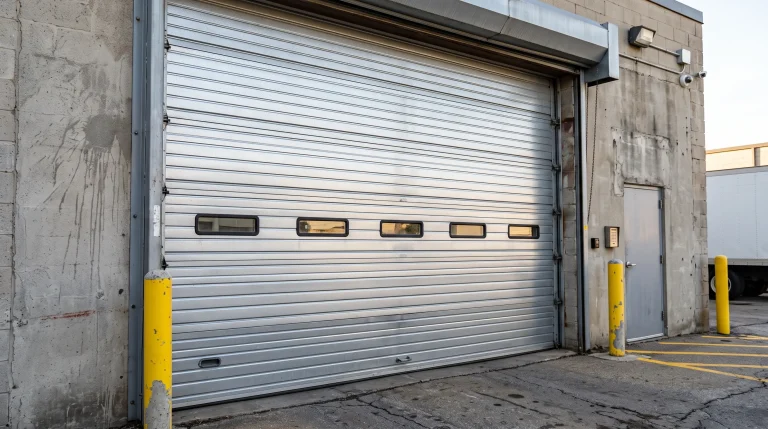
Choosing the right commercial garage door comes down to eight factors: door type, size, material, automation and security, insulation, code compliance, total cost, and installer reputation. Get these eight right, and the door fits how your business actually operates instead of just how it looks in a catalog. Skip any one of them, and it usually shows up later as an unexpected repair, a failed inspection, or a door that never quite matched the job it was bought to do.
Most business owners start this process by asking for a price, but price without context rarely leads to the right decision. A commercial garage door that’s priced well but wrong for your traffic pattern, climate, or code requirements ends up costing more over its lifetime than a slightly higher-priced door that was matched to the building correctly from the start. Working through these eight factors in order gives you a framework for comparing quotes and options on equal footing, rather than choosing based on whichever number looks smallest.
Key Takeaways
- Door type and size are the foundation every other decision builds on.
- Material and insulation influence durability and long-term operating cost.
- Automation, security, and code compliance are not optional extras for most commercial buildings.
- Total cost of ownership matters more than the upfront price alone.
- A reputable local installer with a real warranty protects the investment long after installation.
Comparison Table: The 8 Factors at a Glance
|
Factor |
Key Question to Ask |
Why It Matters |
|
Door Type |
What’s the traffic pattern and clearance? |
Determines the entire category of door |
|
Size |
What are the exact opening dimensions? |
Drives cost and structural requirements |
|
Material |
How much daily impact will it take? |
Affects durability and appearance |
|
Automation |
How often does it cycle, and who needs access? |
Determines opener grade and controls |
|
Insulation |
Is the space behind it climate-controlled? |
Impacts energy cost and comfort |
|
Code Compliance |
Is the opening fire-separated by code? |
Legal requirement, not optional |
|
Total Cost |
What’s the 15 to 20 year cost, not just today’s? |
Better predictor of value than price alone |
|
Installer |
Do they specialize in commercial doors? |
Affects install quality and long-term support |
Working through this table with real answers for your specific building, rather than assumptions, is the fastest way to walk into a quote conversation prepared instead of guessing at what you need.
1. Door Type
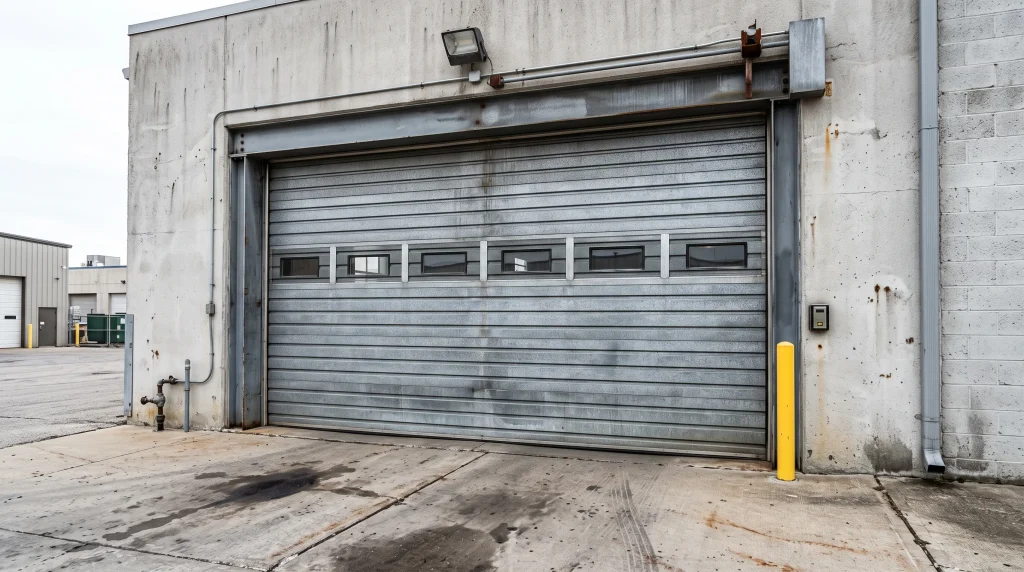
The type of door you need is shaped almost entirely by how the opening is used day to day. Sectional steel doors cover most standard commercial bays, rolling steel doors suit tight clearance and security-focused openings, high-speed doors fit high-traffic industrial settings, and architectural doors serve storefronts where appearance carries real weight.
How Do You Know Which Commercial Garage Door Type Fits Your Business?
The fastest way to narrow this down is looking at traffic volume and ceiling clearance first, since those two factors alone eliminate most of the wrong options before cost ever enters the conversation.
A loading dock and a retail storefront rarely need the same category of door, even if they’re a similar size.
Six specific door types cover nearly every commercial use case, and matching the right one to your building’s daily traffic pattern is worth doing before comparing a single price.
For the full breakdown of all six, read What Are the Different Types of Commercial Garage Doors? 6 Options Compared.
2. Size and Opening Requirements
Every other decision on this list scales with size. Larger openings need heavier-duty tracks, stronger springs or operators, and more structural support, all of which affect both the door’s price and its long-term reliability.
Why Accurate Measurements Matter More Than a Standard Size Estimate
Two openings that look similar from the outside can have meaningfully different structural requirements once actual dimensions and header clearance are measured.
Getting this measurement right before requesting quotes avoids the common problem of a quote changing significantly once an installer actually visits the site.
Nonstandard or oversized openings can also require custom fabrication rather than an off-the-shelf panel, which adds both cost and lead time that’s worth planning for early rather than discovering midway through a project.
3. Material
Steel remains a common and generally cost-effective material for commercial doors, while aluminum, fiberglass, wood composite, and vinyl each serve more specific use cases built around appearance, weight, or weather resistance.
What Material Actually Holds Up Best for Your Specific Building?
The honest answer depends on how the door is used daily.
High-impact loading docks often favor steel; storefronts prioritizing appearance have more flexibility to consider aluminum, fiberglass, or wood composite instead.
Read our full comparison, Which Material Is Best for a Commercial Garage Door? 5 Options Ranked for Durability, for a deeper look at each option.
4. Automation and Security Features
Openers, keypads, remote access, and safety sensors turn a manual door into a system, and the right setup depends heavily on how often the door cycles and who needs access to it throughout the day.
How Do You Choose the Right Automation Setup for a Commercial Door?
Heavier and larger doors require commercial-grade operators built for continuous duty cycles, not lighter residential-style equipment.
Angi’s guide on which garage door opener style is best for you is a useful independent starting point for comparing opener categories before narrowing down a commercial-grade option with your installer.
5. Insulation and Climate Considerations
Insulated panels slow heat transfer through the opening, which matters most for climate-controlled spaces like cold storage, food service, and any conditioned area sitting directly behind the door.
When Does Insulation Make the Biggest Difference?
For uninsulated exterior bays with no climate control behind them, insulation adds cost without much payback.
For conditioned spaces dealing with Sacramento’s hot summers and cool winters, insulation is often one of the more worthwhile upgrades to consider, though the actual energy savings and how quickly the added cost is offset depend on the building, how the space is used, local climate, and the specific door and application.
6. Code Compliance and Fire Rating
Many commercial buildings, particularly warehouses, parking structures, and multi-tenant properties, have fire-rated openings required by code between fire-separated zones. This isn’t a preference; it’s a compliance requirement tied to occupancy classification.
Permit requirements can also vary significantly depending on the specific project, the scope of work, and the local jurisdiction, so it’s worth confirming with your local building department or code official rather than assuming the same requirement applies to every building.
How Do You Know If Your Building Needs a Fire-Rated Door?
A local fire marshal or building code check is the only reliable way to confirm this before installation.
Skipping that check and finding out during an inspection after the door is already in place is a far more expensive problem to fix, and it can delay occupancy or use of the space until the issue is corrected.
7. Cost and Total Ownership
Price is shaped by every factor above it, size, material, insulation, automation, and code requirements, plus installation complexity on top of the door itself.
Read the full breakdown in How Much Does a Commercial Garage Door Cost? 6 Factors That Affect the Price before you request quotes, so you know which line items to expect.
Why Total Cost of Ownership Matters More Than the Sticker Price
A higher upfront cost on material or insulation can sometimes offset lower maintenance and energy spend over 15 to 20 years, depending on the building and how it’s used.
Comparing quotes on total ownership cost rather than the initial number alone tends to produce a better long-term decision.
8. Installer Reputation and Warranty
The door itself is only half the equation. Installation quality affects how well a door performs and how long it lasts, and a real warranty backed by a reputable local company protects that investment well past the first year.
What Should You Look for in a Commercial Garage Door Installer?
Look for local experience with commercial buildings specifically, clear warranty terms in writing, and responsiveness for future service calls, not just installation.
This Old House’s overview of garage doors is a helpful reference for understanding what quality construction and installation should look like, which is also a fair standard to hold any installer to before signing a contract.
The Bottom Line on Buying a Commercial Garage Door
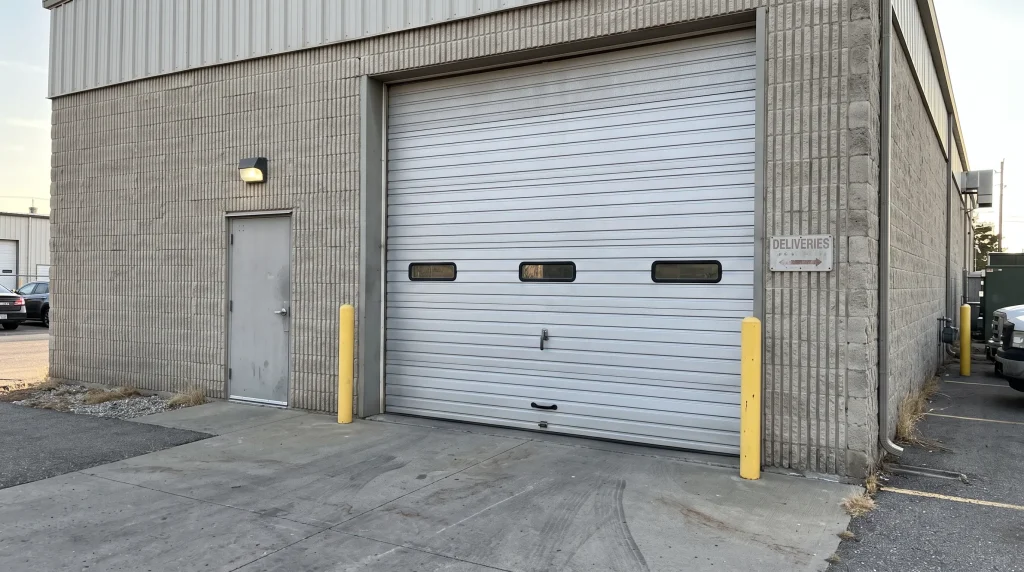
Working through all eight of these factors before requesting quotes puts you in a much stronger position to compare options on real terms instead of price alone. The right commercial garage door is the one matched to how your building actually operates, not the one that happens to be cheapest or most familiar.
R&S Overhead Doors and Gates of Sacramento, Inc. offers on-site consultations to walk through all eight factors for your specific building and recommend the right door with confidence. Contact us today or give us a call to talk through pricing and scheduling for your project.
Frequently Asked Questions
Do all commercial garage doors need to be fire-rated?
No. It depends on occupancy classification and whether the opening sits on a fire-separated wall, which only a local code check can confirm. Permit and inspection requirements around this can also vary by jurisdiction.
Is a more expensive door always the better long-term choice?
Not always, but total cost of ownership over 15 to 20 years is usually a better comparison point than the upfront price alone, especially for material and insulation choices.
How much does automation add to a commercial garage door project?
It varies by door size and duty cycle, but commercial-grade operators built for continuous use generally cost more than lighter residential-style equipment.
Can I upgrade insulation after a door is installed?
Generally no. Insulation is built into the panel during manufacturing, so it needs to be specified before purchase if thermal performance matters to your space.
What’s the biggest mistake businesses make when choosing a commercial door?
In our experience, a common mistake is prioritizing price before confirming door type and code requirements, which can lead to a second purchase within a few years.
How long should a commercial garage door last?
As a general estimate, commercial garage doors with regular maintenance are often expected to last around 20 to 30 years, though actual lifespan varies by door type, material, usage, and environment, and high-cycle doors or harsh conditions can shorten that considerably.
Should I get quotes from multiple installers?
Yes. Comparing quotes on the same eight factors, not just the bottom-line number, makes it much easier to spot which quote is actually the better long-term value.
Does the manufacturer matter as much as the installer?
Both matter, but installation quality has a major impact on how well any door performs, which is why installer reputation is one of the eight factors, not an afterthought.
How do I get an accurate recommendation instead of guessing?
The most reliable way is an on-site walkthrough, since traffic patterns, opening dimensions, code requirements, and permit rules are specific to your building and jurisdiction, and can’t be judged from a general guide alone.