

Galvanized steel is generally considered a strong all-around material choice for many commercial garage doors, offering a solid balance of durability, security, and cost. Aluminum, fiberglass, wood composite, and vinyl each have a place, but they trade off some combination of strength, weight, or weather resistance to gain something else, usually appearance or lighter operation. The right pick depends on how hard the door works and what it needs to look like doing it.
Material choice affects more than day-one pricing on a commercial garage door. It shapes how the door holds up to years of cycling, how much maintenance it demands, and how well it performs against Sacramento’s hot, dry summers and cooler, wetter winters. Getting this decision right up front tends to matter more for long-term cost than almost any other spec on the door, since a mismatched material often means earlier repairs, more frequent refinishing, or premature replacement. It’s a decision worth slowing down for, even when the pressure is on to get a quote and move forward quickly.
Key Takeaways
- Steel is generally the most durable and most common material for high-traffic commercial doors.
- Aluminum is lighter and corrosion-resistant but less impact-resistant than steel.
- Fiberglass resists dents and rust well but costs more upfront.
- Wood composite offers a distinctive appearance for storefronts, with more maintenance required.
- Vinyl holds up well in coastal or high-moisture environments but isn’t rated for heavy-impact use.
Comparison Table: Commercial Door Material at a Glance
|
Material |
Durability |
Weight |
Maintenance |
|
Steel |
Highest impact resistance |
Heavy |
Low |
|
Aluminum |
Corrosion-resistant, lower impact resistance |
Light |
Low |
|
Fiberglass |
High, resists dents and rust |
Moderate |
Low |
|
Wood Composite |
Moderate, sensitive to weather |
Moderate |
High |
|
Vinyl |
High moisture resistance, low impact rating |
Light |
Low |
No single material wins across every category, which is exactly why this decision benefits from being matched to the specific building rather than picked from a general best-of list. A loading dock and a boutique storefront rarely have the same priorities, and the right material for one is often the wrong choice for the other.
1. Steel
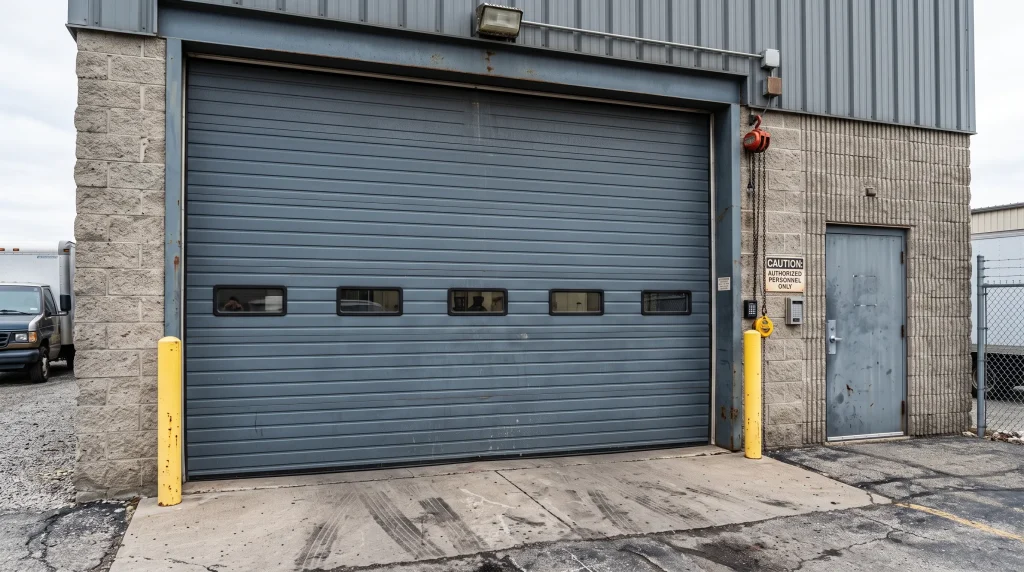
Steel is the industry default for commercial doors because it holds up to daily cycling, resists impact, and is available in a wide range of gauges to match budget and durability needs. Galvanized and galvanneal coatings protect against rust, and thicker gauges, typically 24 or 25 gauge and below, tend to hold up to forklift traffic and weather better than thinner alternatives.
Steel’s biggest advantage is consistency. It tends to perform predictably across a wide range of conditions, from heavy daily impact on a loading dock to years of temperature swings on an uninsulated exterior wall. That predictability is part of why many commercial insurance and code requirements are written with steel as the assumed baseline material.
Why Steel Remains the Top Pick for High-Traffic Commercial Doors
For businesses that need a door to simply perform, day after day, without special handling or extra care, steel is often the safest recommendation.
It’s also usually the easiest material to source replacement panels and hardware for, which tends to keep repair costs and turnaround times lower than with more specialized materials.
Steel also happens to be the default across most commercial door categories.
Read What Are the Different Types of Commercial Garage Doors? 6 Options Compared for how material and type work together.
2. Aluminum
Aluminum doors are naturally corrosion-resistant and significantly lighter than steel, which reduces strain on openers and springs over time. The tradeoff is lower impact resistance, so dents happen more easily in high-traffic environments. Aluminum is often paired with glass paneling for a modern architectural look, which is part of why it’s popular for storefronts rather than industrial bays.
Because aluminum doesn’t rust the way untreated steel can, it tends to hold up especially well in humid or coastal-adjacent settings where corrosion is a bigger long-term concern than daily impact. It’s a material that rewards being matched to the right application rather than used as a universal default.
When Aluminum Makes Sense Over Steel
Aluminum tends to work well for architectural storefronts, glass-paneled doors, and properties where rust resistance matters more than raw impact strength.
It’s also worth considering anywhere reducing the load on an opener or spring system is a priority, since the lighter weight puts less ongoing strain on moving parts.
That reduced strain can extend the working life of springs, cables, and openers, which can partially offset aluminum’s higher susceptibility to denting.
For businesses running a mostly low-impact opening, foot traffic areas, employee entrances, or delivery bays that see hand trucks rather than forklifts, aluminum’s weight advantage often outweighs its impact-resistance tradeoff.
3. Fiberglass
Fiberglass resists denting, cracking, and rust better than most materials, and it tends to hold paint and color well over time without fading as quickly as some alternatives. It typically costs more upfront than steel or aluminum, which is the main reason it isn’t the default choice for budget-driven projects.
Fiberglass also tends to insulate sound reasonably well and doesn’t conduct heat the way metal does, which can be a small but real comfort factor in spaces where people work near the door regularly.
Is Fiberglass Worth the Higher Price for a Commercial Door?
For businesses prioritizing long-term appearance with minimal upkeep, the higher upfront cost can be worth it over a longer ownership window, particularly in harsh sun or salt-air conditions, though whether and how quickly it pays off depends on the building, usage, and local climate.
It’s a material best suited to owners planning to hold the property long-term rather than those optimizing for the lowest possible install cost.
For a closer look at how material choice fits into your overall budget, read How Much Does a Commercial Garage Door Cost? 6 Factors That Affect the Price.
4. Wood Composite
Wood composite doors give commercial storefronts a warm, high-end look that steel and aluminum can’t replicate, while resisting the warping and rot that plagues solid wood. They require more regular maintenance, including sealing and refinishing, to hold up over time, which is worth factoring into a long-term cost comparison rather than just the purchase price.
Wood composite is most common on businesses where the building’s exterior is part of the brand experience, restaurants, boutique retail, and hospitality properties, where the tradeoff of extra upkeep is worth the appearance it delivers.
How Much Maintenance Does a Wood Composite Commercial Door Need?
Expect to reseal or refinish the surface every few years depending on sun exposure.
Skipping this check is a common reason wood composite doors develop uneven wear at the tracks over several years.
According to DASMA’s manufacturer safety guidance, any door material paired with an automatic opener should be inspected periodically to confirm the opener’s force settings still match the door’s weight and material, since finish changes over time can shift a door’s balance.
5. Vinyl
Vinyl doors resist dents, rust, and moisture damage exceptionally well, making them a strong fit for coastal properties or buildings with high humidity exposure. They aren’t typically rated for heavy-impact commercial use, so they’re less common on loading docks and industrial bays, but they tend to hold up well where weather resistance matters more than raw impact strength.
Where Vinyl Commercial Doors Perform Best
Vinyl tends to show up most in light-commercial settings like self-storage facilities, marinas, and small retail units where impact resistance matters less than long-term weather resistance.
Vinyl also tends to hold color well and resists the chalking and fading that some painted steel finishes experience after years of direct sun exposure.
For owners managing several small commercial units where minimizing repaint cycles matters more than maximum durability, that lower-maintenance profile can add up to meaningful savings over time.
Material is just one of eight factors worth weighing; read How Do You Choose the Right Commercial Garage Door? 8 Things to Consider Before You Buy for the complete framework.
For general upkeep guidance across materials, the DOORS IDA care and maintenance resource is a solid independent reference for owners comparing long-term care requirements across different door materials before making a final decision.
The Best Material Is the One Built for the Job, Not the Highest Price Tag
Weighing these five materials against how your door actually gets used, daily impact, weather exposure, and how much upkeep you’re willing to commit to is generally the fastest way to land on the right answer instead of guessing from price alone. The best material is rarely the most expensive one; it’s the one matched to the job.
R&S Overhead Doors and Gates of Sacramento, Inc. can walk you through material options in person for your specific building and explain the tradeoffs for your exact use case. Contact us today or give us a call to talk through pricing and get a recommendation for your building.
Frequently Asked Questions
Is aluminum a good choice for a commercial garage door?
Yes, for lighter-duty or architectural applications where corrosion resistance matters more than impact strength. It’s less ideal for loading docks with heavy daily traffic.
Does fiberglass rust like steel can?
No. Fiberglass doesn’t rust, which is one of its main advantages over steel in humid or coastal environments, though it typically costs more upfront.
How long does a steel commercial garage door last?
As a general estimate, steel commercial doors are often expected to last around 20 to 30 years with regular maintenance, though actual lifespan depends on gauge, coating, usage, environment, and how often the door cycles.
Can I mix materials, like a steel frame with fiberglass panels?
In some cases, yes. Manufacturers offer composite designs, though availability varies, so it’s worth confirming options with your installer before finalizing a spec.
Is vinyl strong enough for a commercial loading dock?
Generally not recommended. Vinyl performs well against moisture and rust but isn’t rated for the impact levels typical of loading dock traffic, where forklifts and pallet jacks regularly make contact with the door.
Does material choice affect insurance or code compliance?
It can, particularly for fire-rated openings, where material and construction must meet a specific fire rating regardless of appearance preferences. Permit and code requirements can also vary by project and local jurisdiction, so it’s worth confirming specifics with your local building department.
Why does wood composite need more maintenance than steel?
Wood composite is more sensitive to UV exposure and moisture over time, so periodic resealing helps prevent surface degradation that steel doesn’t experience.
Which material holds up best in Sacramento’s climate?
Steel and fiberglass both tend to perform well against Sacramento’s hot, dry summers, though fiberglass has an edge in resisting sun-related fading over many years.
How do I know which material is right for my building?
In our experience, the fastest way is matching material to how the door is used daily. High-traffic, high-impact bays call for steel; appearance-focused fronts have more flexibility.