
A power outage can leave your garage door acting strange, even after the lights in the house come back on. One of the most common things homeowners notice right away is a yellow garage door sensor light that was not drawing attention before, followed by a door that hesitates, reverses, or refuses to close.
In Sacramento, CA, this shows up often after winter storms, windy days that knock power lines around, planned utility work, or brief outages that make the garage door opener reboot. The important thing to know is this. A yellow sensor light after an outage does not automatically mean a sensor is broken. More often, it means the system has power again, but the safety signal is not fully steady yet.
Quick Answer
After a power outage, a yellow garage door sensor light usually means the sensor has power, but the opener may be seeing an unstable safety signal due to a restart, a borderline alignment condition, a wiring connection that is not fully stable, or an environmental factor like dust or glare. Start by confirming stable power at the opener, checking for warning indicators, clearing the sensor area, and watching for sensor light flicker that suggests alignment or connection trouble.
If you want the broader overview of what the yellow light means and the key checks to make in any situation, read Yellow Garage Door Sensor Light: What It Means and What to Check.
Why Power Outages Trigger Sensor Light Issues
Garage door openers are small computers. When power drops and returns, the opener restarts and immediately checks its safety system. That includes the photo eye sensors near the floor.
After an outage, a few things can happen at once.
- The opener logic board reboots and runs a safety check
- The sensor circuit may take a moment to read as stable
- Voltage irregularities can reveal a weak connection that was already borderline
- The door may have been moved manually, shifting sensor alignment slightly
- Garage lighting and sunlight angles can change, which can affect the receiver
In many cases, the system stabilizes after a short time. However, if the garage door keeps reversing, refuses to close, or the sensor lights flicker repeatedly after power returns, the issue may require professional garage door repair to restore reliable operation.
What A Yellow Sensor Light Usually Means In This Scenario
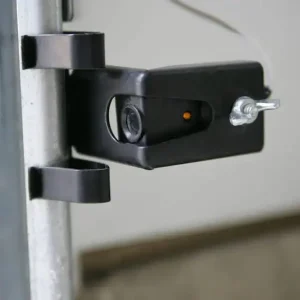
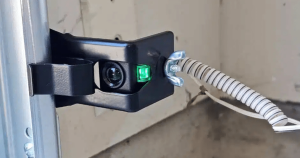
On many systems, the yellow or amber light indicates the sending sensor has power. After an outage, seeing that light can be normal. The bigger clue is what the door does when you try to close it and whether the sensor lights remain steady.
A steady light pattern typically suggests the sensors have power and a stable beam path. A flickering pattern often signals an unstable beam, alignment drift, or a wiring concern.
If the door closes normally and the safety reversal still works when something crosses the opening, the yellow light may simply be showing normal sensor status.
First Checks That Matter Most After An Outage
These checks are safe and help you narrow down the cause without turning this into a repair project.
Confirm The Opener Has Stable Power
After a Sacramento outage, power can return with brief dips or surges. If the opener is on a shared circuit, it may not receive stable power right away.
What to check.
- Make sure the opener is plugged in securely
- Confirm the ceiling outlet has power
- Check for a tripped breaker or a wall switch that controls the outlet
- Listen for repeated reboot behavior or from the opener
If the opener keeps restarting, sensor lights can appear inconsistent even if the sensors are fine.
Because openers rely on electronics, brief spikes during power restoration can cause erratic behavior, and Eaton outlines practical surge-protection guidelines that help reduce electronics disruption.
Check The Opener For Warning Indicators
Many openers use blinking lights on the motor unit to signal a sensor or safety input issue. After an outage, those indicators can help you categorize the problem.
What to check.
- Whether the opener light blinks after a close attempt
- Whether the opener clicks but refuses to move
- Whether the door starts down and reverses quickly
If you see repeated warning behavior, treat it as a sign that the opener is not satisfied with the safety sensor input.
Clear The Sensor Zone Completely
This is the simplest check and one of the most common solutions. During an outage, garages often become a staging area, and something ends up in the beam path.
What to check.
- Nothing is stored near the bottom of either track
- No broom handle, hose, or tool crossing the opening
- No bin corner is sitting in the line between sensors
Even items that feel off to the side can interrupt the beam if they sit slightly in front of a sensor face.
Watch The Sensor Lights For Flicker
This provides fast information.
What to check.
- Are the lights steady, or do they flicker
- Does the flicker change when the door vibrates
- Does the flicker change when the sensor bracket is lightly touched
A flicker that changes with vibration often points to bracket looseness or alignment drift.
Why The Door May Close Sometimes But Not Others
If the door works once and fails the next time, the sensor signal may be right on the edge. The system might pass on one cycle and fail on the next due to small changes such as vibration, glare, floating dust, or intermittent wiring contact.
If you want a deeper breakdown of causes that create borderline signals like this, read Common Reasons a Garage Door Sensor Light Turns Yellow.
Sacramento Patterns That Show Up After Outages
Power interruptions can create patterns that show up more often in certain local garage environments.
Borderline Sensor Alignment Meets A Fresh Restart
If the sensor alignment was already close but not stable, the opener reboot can reveal it.
Clues.
- One sensor light appears dim
- The door reverses quickly during closing
- The issue appears immediately after the outage
GFCI Or Shared Circuit Problems
Some garages have outlets protected by GFCI devices, sometimes located elsewhere in the garage or outside. If a GFCI trips, the opener may lose power or behave inconsistently.
Clues.
- Opener has power briefly, then goes dead
- Wall console flickers
- Other garage outlets are out
Voltage Fluctuations Reveal A Weak Connection
A surge or unstable restoration can expose a loose wire connection at the opener terminal or near the sensor.
Clues.
- Sensor lights are on, but the door still refuses to close
- The issue persists across multiple tries
- Flicker does not improve with simple checks
If the door will not close and you suspect an electrical issue, read When A Yellow Sensor Light Means A Wiring or Sensor Failure.
Sunlight Glare During Your First Test
After an outage, homeowners often test the door at a time they normally do not. If the garage faces west, you might run into glare interference that is time-dependent.
Clues.
- The issue is worse in the late afternoon
- It improves later in the day
- Sunlight hits the sensor face directly
What To Check Without Turning It Into A Repair Project
These are safe checks that help you decide whether the issue is minor or service-level.
Check Bracket Stability
You are not doing a full adjustment here. You are confirming whether the sensor mount is stable.
What to check.
- The bracket does not wobble when lightly touched
- The sensor is not drooping or twisted
- The sensor face aims across the opening
Inspect The Sensor Lens Surface
Sacramento dust can coat lenses quickly.
What to check.
- Dust film, haze, or smudges
- Cobwebs around the sensor face
- Cracks or damage to the housing
Inspect Wiring Visually
Do not pull wiring or re-seat terminals if you are not trained. Just inspect.
What to check.
- Pinched insulation
- Exposed copper
- Wire pulled tight with no slack
- Staples pressing hard into the wire
If you see damage, stop and schedule service.
Watch For Door Travel Resistance
Sometimes the door is binding, and the opener is reacting to resistance.
What to check.
- Jerky movement in the track
- Scraping noises
- The door reverses at the same point every time
If you notice resistance, sensors may not be the main issue.
When To Stop And Call A Technician
Stop home checking and schedule service if any of the following happen.
- The door reverses repeatedly with no obvious beam obstruction
- Sensor lights flicker, and you cannot stabilize them with basic checks
- Wiring appears damaged or corroded
- The opener shows repeated warning behavior after close attempts
- The system behaves unpredictably after power returns
This matters most for households with children, pets, or heavy garage entry use.
Entrapment protection requirements for residential garage door operators are addressed in federal safety regulations, which is why persistent sensor or reversal issues after an outage should be taken seriously.
Ways To Reduce Post-Outage Sensor Problems In Sacramento
Power outages are not always avoidable, but repeated sensor trouble after outages can often be reduced.
- Keep the sensor area clear
- Include sensor lenses in routine cleaning
- Reduce reflective clutter near the opening
- Verify sensor mounts after garage reorganization
Getting Back To A Reliable Garage Door After An Outage
A yellow sensor light after a power outage usually means the sensor has power again, but the safety signal may not be completely stable yet. In many Sacramento garages, the cause turns out to be something simple, such as a blocked beam path, dust on the sensor lens, or a sensor bracket that shifted slightly. In other situations, the outage exposes wiring instability or a sensor that is starting to wear out.
If your garage door continues reversing, the sensor lights flicker, or the door refuses to close consistently, it is best to have the system inspected by trained technicians. R&S Overhead Doors and Gates of Sacramento, Inc., Inc provides professional garage door inspection and repair services throughout Sacramento, CA. If your garage door started acting up after a power outage, contact us today or give us a call to schedule service and restore safe, dependable operation.