

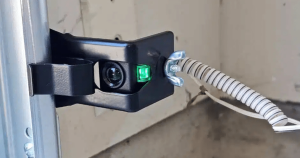
A yellow garage door sensor light can feel confusing because the door may still move sometimes, then refuse to close the next time. That light is part of the safety sensor system, also called photo eyes. The sensors sit near the bottom of the tracks and confirm the opening is clear before the garage door opener allows a full close.
In Sacramento, CA, this issue shows up often after dusty weeks, windy afternoons that blow debris into the garage, garage cleanouts that bump sensor brackets, and seasonal light changes that create glare at certain hours. The yellow light is not always a failure, but it is a signal that the sensor system deserves a careful check so the door stays safe and dependable.
Quick Answer
A yellow garage door sensor light usually means the sending sensor has power and is transmitting an infrared signal toward the receiving sensor. If the door will not close or reverse, the most common causes are sensor alignment drift, a blocked beam, dirty lenses, sunlight glare, moisture or corrosion at connections, or wiring signal problems. When these issues keep happening, or the door will not close reliably, it is often a sign that garage door repair is needed to restore safe operation.
If the yellow sensor light appeared right after an outage or breaker reset, read What to Do When a Yellow Sensor Light Appears After a Power Outage.
Why This Light Matters For Safety And Daily Use
Garage door safety sensors exist for one reason. Prevent the door from closing when something is in the opening. When the sensor signal is not steady, the opener may stop the closing cycle or reverse. That can be frustrating, but it is also the system doing its job.
A yellow light often appears on the sending side in many common opener brands. The receiving side often shows a different color when the beam is detected. The exact color behavior varies by brand and model, so the safest approach is to treat the yellow light as a status indicator and use door behavior and a few safe checks to narrow the cause.
For deeper context on how modern openers improved entrapment protection over time, UL Standards & Engagement provides an overview of UL 325’s role in advancing automatic garage door safety.
How Photo Eye Sensors Work In Plain Terms
Photo eyes work like a simple invisible trip line.
- One sensor sends an infrared beam across the opening
- The other sensor receives that beam
- If the beam is steady, the opener allows the door to close
- If the beam is blocked or unstable, the opener stops or reverses
This system depends on three things staying consistent.
- Clear line of sight between sensors
- Stable alignment so the beam hits the receiver
- Clean and solid wiring connections so the signal stays steady
When any one of those slips occurs, the sensor lights can change, and the door can start acting unpredictably.
What A Yellow Sensor Light Usually Indicates
A yellow or amber sensor light most commonly indicates power at the sensor. In other words, the sensor is on and trying to do its job. That is helpful because it narrows the problem.
If you have a yellow light and the door still refuses to close, it often means the system has power but does not have a stable beam confirmation. That points to alignment, blockage, lens contamination, glare, wiring integrity, or a sensor that is nearing the end of its service life.
Some Common Reasons A Garage Door Sensor Light Turns Yellow
This section is written like a technician would approach it in the field. Start with the simplest, most frequent causes, then move toward the less common but more serious ones.
Sensor alignment drift near the floor
Sensors sit low for a reason, but that location also makes them easy to bump. A small movement can shift the beam enough to create an unstable signal.
Common Sacramento garage scenarios that cause alignment drift include:
- Moving storage bins across the floor
- Sweeping or blowing out the garage and nudging a bracket
- Rolling trash carts near the track
- Bikes, scooters, or sports gear brushing the sensor mount
What to check safely:
- Verify that both sensors face each other directly
- Check if either bracket is tilted, loose, or slightly twisted
- Watch the indicator lights while the door is at rest to see if the light flickers
A flicker that changes when the sensor mount is gently touched is a strong clue that alignment or bracket stability is involved.
Dust and grime on the sensor lens
Sacramento can be dry for long stretches, and dust builds up fast in garages. A thin film on the lens can weaken the beam enough to create a warning pattern.
What to check safely:
- Inspect the sensor lens surface for haze, dust, spider webs, or smudges
- Check the area around the sensor for yard debris or cobweb buildup
Tip to avoid repeat issues:
- Include the sensor lenses in routine garage cleaning, especially after windy days or yard work
Obstructions at the bottom of the opening
A sensor beam can be blocked by items that do not seem obvious at first glance.
Examples technicians find often:
- The handle of a rake or broom leaning into the beam path
- The corner of a storage tote
- A folded tarp
- Stacked bags of soil or pet food
- A shop vacuum hose crossing the opening
What to check safely:
- Clear the area along the floor line between sensors
- Confirm nothing is in front of either sensor face
Sun glare and bright reflections
At certain times of day, bright sunlight can interfere with the receiver sensor. In Sacramento, this can show up in late afternoon for garages facing west, or when light reflects off a nearby vehicle or light colored surface.
What to check safely:
- Note whether the problem occurs at the same time each day
- Observe whether direct sunlight is hitting a sensor’s face
- Pay attention to reflections off a parked vehicle or glossy surfaces
Tip to avoid repeat issues:
- Keep the sensor faces shaded from direct glare when possible, and avoid storing reflective items near the beam path
Moisture and mild corrosion at connections
Even in a dry climate, moisture still happens. Rainy weeks, sprinkler mist drifting into an open garage, or damp air can create corrosion at low-voltage connections. Sensor wiring is thin and sensitive.
What to check safely:
- Inspect visible wiring near the sensor for discoloration or greenish residue at exposed copper
- Check whether the wire is firmly secured at the sensor and not partially pulled out
If corrosion is present, the most reliable path is professional inspection. Corrosion can keep returning if the connection is not restored properly.
Wiring tension and staple damage
A frequent hidden cause is wiring that was installed too tightly, stapled too aggressively, or pinched by a bracket. Over time, vibration and temperature changes can worsen a weak spot.
What to check safely:
- Scan the visible wire run for pinched sections, tight bends, or crushed insulation
- Note any sections where the wire is pulled taut with no slack
This is a situation where safe observation is valuable, but repair work should be handled by a qualified technician to avoid damaging the opener control board.
Sensor wear and aging electronics
Sensors are small electronic devices. Heat, dust, moisture, and vibration add up over the years. When sensors age, they can become less tolerant of minor alignment changes and begin to behave inconsistently.
Clues that point toward aging sensors:
- The door works for a while, then suddenly refuses to close
- The sensor light’s behavior changes with no obvious cause
- Alignment seems correct, but the system still acts unstable
In these cases, a technician may test the sensor signal and wiring integrity to determine whether replacement is appropriate.
If you want a deeper breakdown of root causes tied to dust, glare, and alignment drift, read Common Reasons a Garage Door Sensor Light Turns Yellow.
What To Check First When You Notice A Yellow Sensor Light
This is the order many garage door professionals follow because it saves time and avoids unnecessary adjustments.
Confirm door behavior during closing
A sensor issue often shows up the same way.
- The door starts down, then reverses
- The door stops, and the opener lights flash
- The door closes only when the wall button is held down, depending on the opener’s features and settings
These behavior patterns help narrow the cause, especially when paired with the sensor light status.
Clear the beam path completely
Remove anything that could intersect the beam, even if it seems far from the sensors. Low beams can be interrupted by items sitting slightly forward of the sensor face.
Inspect both sensor faces for contamination
Dust, cobwebs, and smudges are common. A quick, gentle lens cleaning can restore a stable beam in many cases. Avoid harsh chemicals and abrasive materials.
Check bracket stability
If a bracket wobbles, the alignment will not stay steady. A stable mount is just as important as sensor alignment.
Observe the wiring near each sensor
You are not repairing wiring here. You are checking for obvious concerns.
- Frayed insulation
- Pinched sections
- Loose wire at the terminal
- A wire that is pulled tight
If any of these appear, it is a strong sign to schedule professional service.
The International Door Association recommends a simple monthly photo-eye test (for example, closing the door and safely breaking the beam with a long object) to confirm the reversing system responds correctly.
Sacramento Conditions That Make Sensor Issues More Likely
Local context matters because it affects what causes show up most often.
Summer dust and garage airflow
Hot, dry stretches mean more airborne dust. Garages also become mini workshops during the summer, which stir up particles. That dust settles on sensor lenses and inside sensor housings.
Wind events and debris blow in
Sacramento can see gusty afternoons that push leaves, grass clippings, and fine dust into garages, especially when doors are opened frequently.
Seasonal sunlight angles
Sun angles shift through the year. A sensor that has been reliable for months can suddenly start acting up at a specific hour as sunlight lines up with the sensor face.
Garage use as storage space
Many local homeowners use the garage as both parking and storage. That raises the chance of bumps to sensor brackets and accidental beam blockage.
When A Yellow Sensor Light Is Not The Main Problem
Sometimes the sensor light gets attention, but the real issue is elsewhere. A professional evaluation can separate sensor signal problems from other causes like track resistance, roller wear, cable tension imbalance, or opener control issues.
Signs the issue may not be only sensors:
- The door moves unevenly or jerks
- The door feels heavy or unbalanced during manual movement
- You hear grinding or rubbing during travel
- The door binds at the same spot each cycle
In these cases, the sensor system may be reacting to abnormal door travel, not causing it.
If your door refuses to close and you suspect an electrical issue, read When a Yellow Sensor Light Means a Wiring or Sensor Failure.
What Not To Do When The Door Will Not Close
A few actions can make the problem worse or create a safety risk.
- Do not bypass safety sensors
- Do not force the door down against resistance
- Do not tug or twist the sensor wiring to “test” it
- Do not repeatedly run the opener through cycles, hoping it resolves itself
If the door refuses to close and the sensor lights show instability, the safest move is to pause and schedule a professional inspection.
Smart Ways To Reduce Repeat Sensor Problems
These tips help lower the chance of the yellow light becoming a recurring headache.
- Keep the sensor zone clear
- Add sensor lens checks to routine garage cleaning
- Watch for bracket drift after garage reorganizing
- Limit reflective clutter near the opening
Reliable Help For Sensor Issues In Sacramento
A yellow sensor light often points to a condition that is simple to confirm, such as lens contamination or minor alignment drift. It can also be the early sign of wiring signal trouble or sensor wear that keeps returning until it is properly addressed.
For Sacramento homeowners dealing with recurring sensor light issues, a professional inspection can confirm whether the system is dealing with alignment instability, wiring integrity concerns, glare interference, or aging sensor hardware. R&S Overhead Doors and Gates of Sacramento, Inc., Inc can inspect the full safety sensor circuit and door operation and help restore dependable closing performance, so contact us today or give us a call to schedule service and get your garage door operating safely again.