Walk through any industrial district in Sacramento, and you will notice that not every commercial rolling door looks the same. Some are solid steel. Some have open grille designs. Others are built to contain fire or manage temperature. That variety exists for a reason: different businesses have different needs, and the wrong door type can create real problems down the road.
Choosing the right commercial rolling door starts with understanding what each type is built to do. Whether you manage a warehouse, a retail shop, a parking structure, or a food storage facility, there is a specific door type designed with your operation in mind. This guide breaks down the most common commercial rolling door types so you can make a well-informed decision for your property.
Rolling Steel Doors: The Standard Choice for Heavy-Duty Use
Rolling steel doors are the most widely used commercial rolling door type across industries. They are made from interlocking steel slats that coil around a drum mounted above the door opening. When opened, they take up minimal overhead space, which makes them a practical choice for facilities where clearance is limited.
These doors are available in several gauges, meaning the thickness of the steel can be adjusted based on how much security and durability your facility requires. Thicker gauges offer stronger resistance to impact and forced entry.
- Common in warehouses, loading docks, and manufacturing plants
- Available in galvanized or painted steel finishes
- Can be manually operated or fitted with a motorized operator
- Handles high daily open-and-close cycles without breaking down quickly
If you are still figuring out whether this type of door fits your property, reviewing Commercial Rolling Doors: Benefits and Best Uses gives you a solid foundation before diving deeper into specific types.
Insulated Rolling Doors: Built for Temperature-Sensitive Facilities
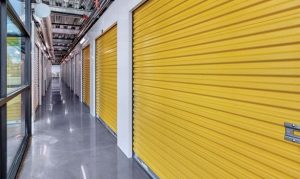
Standard rolling steel doors do not provide much thermal protection on their own. Insulated rolling doors solve that problem. They feature steel slats filled with insulating material, typically polyurethane or polystyrene foam, which helps maintain interior temperatures and reduces energy loss. Insulated sectional doors can also be a strong option for temperature-sensitive facilities, especially when a building benefits from panel-based construction with thicker insulation layers.
For Sacramento businesses that deal with food storage, pharmaceuticals, cold chain logistics, or any climate-sensitive inventory, insulated rolling doors are a practical investment that pays off over time through lower energy costs and better temperature stability.
- Slats are filled with foam insulation for thermal efficiency
- Reduces heat gain during Sacramento’s hot summer months
- Helps maintain stable temperatures in refrigerated or heated spaces
- Also provides better sound dampening compared to non-insulated doors
The insulation rating of the door, often measured as an R-value, will vary depending on the thickness and material used. A higher R-value means better thermal resistance.
Rolling Steel Service Doors: Reliable for Everyday Access
Rolling steel service doors are a lighter-duty version of standard rolling steel doors. They are designed for facilities that need reliable access without the heavier construction of industrial-grade models. You will often find them in smaller commercial spaces, back-of-house entrances, and storage rooms.
They are a cost-effective option when maximum security or extreme durability is not the top priority, but consistent, smooth daily operation is still important.
- Lighter construction than heavy industrial rolling doors
- Well-suited for back entrances, storage areas, and smaller retail spaces
- Available with manual or motorized operation
- Lower overall weight puts less strain on the operating mechanism
For facilities that experience moderate daily traffic, this type of door offers a reliable balance between function and practicality.
Rolling Steel Fire Doors: A Critical Safety Requirement
Fire-rated rolling doors are not optional in many commercial buildings. They are required by fire codes in areas where a door must act as a barrier to prevent fire and smoke from spreading between sections of a building. These doors are designed to close automatically when triggered by a fusible link or a fire alarm system.
Fire door assemblies must meet strict installation and testing standards to be effective in an emergency. Working with a licensed professional ensures your installation meets local Sacramento building codes and fire safety regulations.
- Automatically closes when heat or smoke is detected
- Rated for specific fire resistance durations, commonly 1.5 to 4 hours
- Required in corridors, stairwells, and openings between fire-rated walls
- Must be tested and certified by a recognized testing laboratory
Fire doors should never be propped open or obstructed. Regular inspections by a qualified technician are essential to ensure they function correctly when needed.
Rolling Grille Doors: Visibility and Security for Retail Spaces
Rolling grille doors are made from interlocking steel links or bars rather than solid slats. This open design allows light and visibility to pass through while still providing a physical security barrier. They are a popular choice for retail storefronts, mall entrances, and concession stands.
In Sacramento shopping centers and commercial plazas, rolling grilles are often used to secure a storefront after hours while still allowing passersby to see merchandise displays inside.
- Open design maintains visibility through the door
- Provides a physical deterrent without blocking sightlines
- Often used in malls, airports, and retail corridors
- Available in a range of finishes to complement storefront aesthetics
One important consideration is that rolling grilles do not offer the same level of weather protection as solid rolling doors. They are best used in covered or interior environments where exposure to rain and wind is not a concern.
Different door designs and materials are explored in resources covering all about garage doors, helping property owners understand functional trade-offs.
Aluminum Rolling Doors: Lightweight and Corrosion Resistant
Aluminum rolling doors are a strong alternative to steel for facilities where weight and corrosion resistance are priorities. Aluminum is naturally resistant to rust, which makes these doors a smart choice for facilities near water, in humid environments, or where chemical exposure is a possibility.
They are lighter than steel, which reduces the load on the operating mechanism and can extend the life of the motorized operator. However, aluminum is not as strong as steel under heavy impact, so it is better suited for lower-security or moderate-use applications.
- Naturally resistant to rust and corrosion
- Lighter weight reduces strain on door operators
- Good choice for coastal areas or facilities with chemical exposure
- Available in anodized or painted finishes for a clean, professional appearance
For businesses in Sacramento that prioritize appearance along with function, aluminum rolling doors offer a polished look that holds up well over time.
Counter Shutters: Compact Security for Service Windows
Counter shutters are a smaller-scale version of rolling doors designed specifically for service windows, concession counters, and pass-through openings. They work on the same coiling principle as full-size rolling doors but are built for much smaller openings.
You will commonly find them in banks, stadiums, food service areas, hotel front desks, and pharmacies. They offer a quick, secure closure of a service window at the end of the day without requiring a full door installation.
- Designed for small openings like service counters and windows
- Available in solid or grille styles, depending on visibility needs
- Compact drum takes up minimal space above the opening
- Can be manually operated or motorized for high-traffic windows
If your business has a service counter that needs secure after-hours protection, a counter shutter is a practical and space-efficient solution.
Choosing the right size and configuration depends on usage and opening type, as explained in guides on how to choose a garage door.
High-Speed Rolling Doors: Efficiency for High-Traffic Entrances
High-speed rolling doors are built for facilities where speed and efficiency matter. Standard rolling doors open and close at a moderate pace, but high-speed versions can cycle much faster, which reduces wait time, minimizes energy loss, and lowers the risk of door damage from vehicles or equipment moving through frequently.
They are commonly used in cold storage, food processing, automotive facilities, and distribution centers where doors are opened and closed dozens or even hundreds of times per day.
- Operates significantly faster than standard rolling doors
- Reduces energy loss in temperature-controlled environments
- Self-repairing curtain options available to handle accidental impacts
- Reduces wear on the operating mechanism compared to standard doors cycling at high frequency
Understanding which type fits your facility is one part of the decision. Knowing what to watch for once it is installed is just as important. If your door starts behaving differently over time, check out the Signs Your Commercial Rolling Door Needs Repair to catch problems early before they become serious.
Matching the Right Door Type to Your Business
Every business has a different set of demands, and the best commercial rolling door is the one that matches those demands closely. A retail storefront in Sacramento has different needs than a cold storage warehouse or a fire-rated corridor inside a hospital. Taking the time to evaluate your facility’s traffic volume, security requirements, temperature needs, and local building codes will lead you to a much better outcome than simply choosing the most common option.
If you are weighing your options and want expert guidance on which configuration works best for your building, the resource on How to Choose the Right Commercial Rolling Door breaks down the decision-making process in a clear and practical way.
Get the Right Door Installed the First Time
Selecting the right commercial rolling door type is only half the job. The installation needs to be done correctly, by someone who knows local codes, building requirements, and the specific demands of commercial properties in Sacramento.
R&S Overhead Doors and Gates of Sacramento, Inc., Inc has the experience to help you select, install, and maintain the right rolling door for your facility. Whether you need a fire-rated door for a corridor, an insulated door for a cold storage unit, or a rolling grille for a retail storefront, our team is ready to walk you through every option. Contact us today or give us a call to get started.