
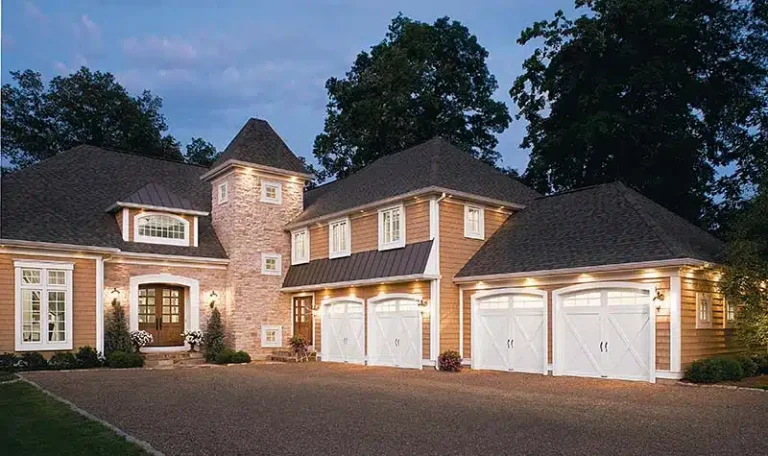
Choosing a carriage garage door is not as simple as pointing to the one that looks nice in a catalog. The right door for your home depends on your architecture, your climate, your budget range, and how much upkeep you are willing to commit to over time.
Sacramento homeowners have more options today than ever before, which is a good thing, but it can also make the decision feel overwhelming. This guide cuts through the noise and walks you through every factor worth considering so you can move forward with confidence and end up with a door you are genuinely happy with for years to come.
Start With Your Home’s Architectural Style
Before you look at a single door option, take a step back and study the exterior of your home. The right carriage door should feel like it belongs there, not like it was added as an afterthought.
- Craftsman and bungalow homes pair best with carriage doors that feature natural wood tones, horizontal plank detailing, and simple hardware in a matte black or oil-rubbed bronze finish.
- Colonial and traditional homes benefit from carriage doors with symmetrical panel layouts, raised-field sections, and hardware that echoes the formal character of the architecture.
- Farmhouse-style homes are well-suited to barn-inspired crossbuck patterns with bold black strap hinges that reinforce the rural, open aesthetic those homes are known for.
- Transitional homes that blend classic and contemporary elements work well with cleaner carriage door profiles, minimal crossbuck detail, and hardware in brushed nickel or satin black.
- If you are unsure about your home’s style category, a simple approach is to photograph the front of your home and bring it along when speaking with a garage door professional, since matching to existing visual cues is often the most reliable starting point, and that same professional can also handle any garage door repair needs while they are there.
Getting this step right first makes every other decision easier because it narrows the field considerably before you even get to materials or colors.
Understand the Material Options Available to You
Material choice is one of the most important decisions you will make, and it affects the door’s appearance, durability, maintenance needs, and overall cost range.
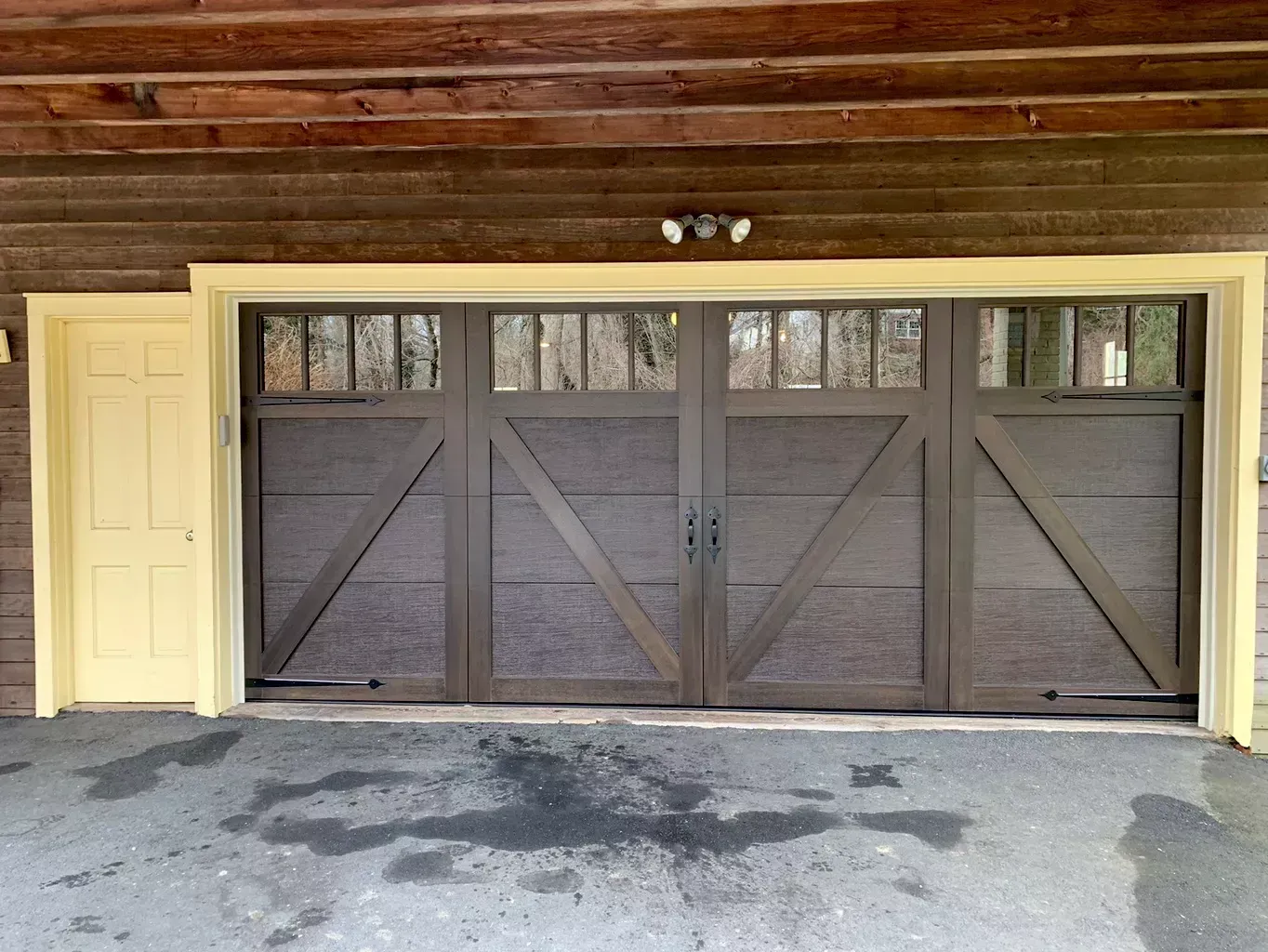
- Steel doors with an embossed wood-grain finish are the most widely chosen option because they deliver a convincing carriage appearance with minimal maintenance and strong resistance to denting and fading.
- Solid wood doors offer the most authentic carriage look and feel, but they require consistent upkeep, including repainting or resealing every few years, which is especially important in Sacramento, where summer heat can cause wood to expand and contract.
- Composite wood doors are engineered to resist warping and cracking better than solid wood while still providing a natural texture, making them a practical middle-ground option for homeowners who want the wood aesthetic without the full maintenance commitment.
- Fiberglass doors are lightweight and resist rust and denting, making them worth considering in areas with temperature swings, though they may not carry the same visual weight as steel or wood options.
- Aluminum doors are less common for the carriage style but work well on contemporary homes that want the shape of a carriage door combined with a more modern, lightweight material.
Each material comes with a different price range, so being clear about your priorities before speaking with a professional helps you get a recommendation that genuinely fits your situation.
To get a solid foundation on what carriage doors are and how they are built, start with What Is a Carriage-Style Garage Door? before diving into material comparisons.
Choose Hardware That Complements Your Home’s Exterior
The hardware on a carriage door, including the strap hinges, handles, and decorative nail heads, is what gives the door much of its character. Choosing the right finish ties the door back to the rest of the home’s exterior details.
- Black iron finish is the most traditional and versatile hardware choice, working well on craftsman, farmhouse, colonial, and most traditional home styles without competing with other exterior elements.
- Oil-rubbed bronze adds warmth and a slightly more refined feel, pairing well with homes that have warm-toned brick, stone, or stucco exteriors common in many Sacramento neighborhoods.
- Brushed nickel and satin black finishes work best on transitional or updated traditional homes where the exterior details lean toward a cleaner, more contemporary expression.
- Antique brass hardware is less common but suits homes with a more ornate or Victorian-inspired exterior where the warmth and patina of aged metal fits naturally.
- When selecting a hardware finish, compare it directly against your existing front door handle, exterior light fixtures, and house numbers so all the metal elements on the front of the home work together rather than competing with each other.
Hardware is one of the smaller details in the overall decision, but it is often the finishing touch that makes a carriage door look truly intentional rather than just standard.
Factor in Sacramento’s Climate When Choosing Your Door
Not every material or finish performs the same way in every environment. Sacramento’s dry summers, mild winters, and occasional stretches of intense heat are all worth factoring into your decision before you commit.
- Wood doors are beautiful but require more seasonal attention in Sacramento because the dry heat can cause surfaces to crack or peel if the finish is not kept up, especially on south or west-facing garages that receive direct afternoon sun.
- Steel and composite doors handle Sacramento’s temperature range well and are less prone to surface damage from UV exposure when they have a quality factory-applied finish.
- Insulated doors are worth serious consideration for attached garages in Sacramento since summer garage temperatures can climb significantly and transfer heat into the home, affecting comfort and energy use.
- Light-colored doors reflect more sunlight and tend to stay cooler on the surface during hot months, which can extend the life of the finish compared to darker colors that absorb more heat.
- Checking the door’s R-value, which measures its insulation performance, is a useful step for homeowners who want to be specific about energy efficiency rather than just estimating it.
A garage door professional familiar with the Sacramento area can give practical guidance on which materials and finishes have performed best locally over time.
When checking a door’s R-value, the U.S. Department of Energy’s insulation guidance provides a useful reference for understanding what different insulation ratings actually mean for heat transfer and energy costs.
Match the Door Style to Your Garage’s Size and Layout
The physical dimensions and layout of your garage opening influence which carriage door configurations will look and work best. Getting this right is a practical step that is easy to overlook when focusing only on appearance.
- Single-car garage openings typically work best with a simpler carriage door design since a highly detailed pattern on a narrow door can feel visually cramped rather than elegant.
- Double-car garage openings give carriage doors room to display their full design, and a center hardware accent such as a handle or decorative hinge pair at the midpoint of the door helps it read as two panels rather than one large flat surface.
- Taller garage openings are an opportunity to add a window row at the top, which balances the increased height and lets natural light into the garage interior.
- Older Sacramento homes sometimes have non-standard opening widths that require custom sizing, so measuring carefully before selecting a door is an important early step.
- If your garage has limited headroom above the opening, confirm with a professional that the door’s track configuration will work within that space before ordering, since some styles require more overhead clearance than others.
Taking accurate measurements and reviewing them with a professional before finalizing a selection prevents the most common and avoidable installation complications. That same professional familiarity with your setup also proves valuable down the road, if a spring snaps or a track shifts unexpectedly, a technician who already knows your door’s configuration can handle emergency garage door repair faster and with fewer surprises.
Consider How Much Maintenance You Are Willing to Do
Be realistic about the level of upkeep you are prepared to commit to. A door you love but cannot keep up with will end up looking worse than a simpler door that is easy to maintain.
- Steel and composite carriage doors need relatively little attention beyond periodic cleaning, lubrication of moving parts, and occasional touch-up of any chips or scratches in the finish.
- Wood carriage doors need repainting or resealing on a regular schedule, closer inspection after seasonal temperature changes, and prompt attention to any cracking or peeling before moisture gets underneath the surface.
- Decorative hardware on any carriage door should be wiped down periodically and checked for any signs of surface corrosion, particularly on homes close to landscaping irrigation that might create more moisture exposure.
- Weatherstripping along the bottom and sides of the door should be inspected at least once a year and replaced when it shows signs of cracking, compression, or gaps that allow air, dust, or pests to enter.
- If you want the authentic look of wood but prefer lower maintenance, a high-quality steel or composite door with a realistic wood-grain texture is a strong option that most visitors will not distinguish from the real thing at normal viewing distance.
For a professional-grade reference on what routine maintenance should include, the International Door Association’s care and maintenance guide outlines what qualified technicians check during a service visit.
For a full breakdown of what maintenance looks like after installation, see How to Maintain a Carriage-Style Garage Door.
Know What Questions to Ask Before You Buy
Walking into a purchase decision with the right questions prepared puts you in a much better position to evaluate your options and avoid common mistakes.
- Ask about the door’s insulation rating and whether it is appropriate for an attached or detached garage in Sacramento’s climate.
- Ask whether the hardware is included in the base price or priced separately, since the cost of decorative hardware can add up depending on the finish and configuration you choose.
- Ask about the warranty on the door panels, finish, and mechanical components separately, since these may be covered under different terms by the manufacturer.
- Ask whether your existing opener and spring system are compatible with the weight of the door you are considering, since heavier doors sometimes require hardware upgrades.
- Ask for references or examples of similar doors installed in your area, since seeing how a specific style looks on a comparable home gives you a much clearer picture than a catalog photo alone.
For a broader context on why this style is worth the investment, see Why Homeowners Love Carriage-Style Garage Doors.
Ready to Choose the Right Door for Your Sacramento Home?
Choosing a carriage garage door is a decision that touches on aesthetics, practicality, and long-term value all at once. When you work through each factor carefully, the right choice becomes much clearer, and the result is a door that genuinely fits your home rather than one that was simply available.
The team at R&S Overhead Doors and Gates of Sacramento, Inc., Inc has helped countless Sacramento homeowners navigate exactly this process from material selection to hardware finish to final installation. Contact us today or give us a call, and let us help you find the carriage door that is right for your home.