
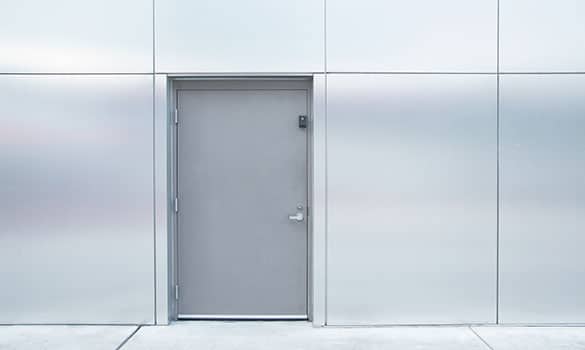
A hollow metal door is a steel door built around an internal structural frame, typically made of steel channels, honeycomb material, or a rigid foam core. The exterior is covered with steel sheets, making it strong and impact-resistant without being fully solid steel throughout.
These doors are used across Sacramento in:
- Commercial office buildings and retail spaces
- Schools, hospitals, and government facilities
- Apartment complexes and multi-family housing
- Garages and industrial properties
- Fire-rated stairwells and exit corridors
In Sacramento’s climate where summer temperatures regularly hit triple digits and winter brings steady rain and fog, hollow metal doors face constant stress from heat expansion, moisture infiltration, and heavy daily use. That combination of weather extremes and wear makes regular inspection and timely repair critical for any property owner in the area.
7 Signs Your Hollow Metal Door Needs Repair
1. Visible Dents and Surface Damage
Dents look like a cosmetic issue, but they can run deeper than the surface. When the steel face takes a hard impact, it can break the bond between the outer skin and the internal core, a process called delamination. Once that separation starts, moisture gets in and the structural performance of the door drops fast.
What to check: Inspect the edges, corners, and latch side of the door. These spots absorb the most impact from daily use and are the first places damage shows up.
How to prevent it: Install protective kick plates on high-traffic doors and add door bumpers to loading areas or corridors where equipment moves through regularly.
Wondering if the damage has gone too far for a simple fix? Read “Can a Hollow Metal Door Be Repaired?” to find out what options are actually on the table.
2. Rust and Corrosion
Rust is the most destructive long-term threat to hollow metal doors. Sacramento may not sit on the coast, but the Sacramento Valley’s wet winters, morning tule fog, and humidity are more than enough to trigger oxidation on bare or scratched steel.
Surface rust is manageable when caught early. But corrosion that works its way into the door’s core compromises its fire rating, structural integrity, and security performance.
What to check: Start at the bottom edge and corners, where moisture pools most often. Also look around hardware holes and any areas where paint is chipped or missing.
How to prevent it: Touch up paint chips immediately with rust-inhibiting primer. Make sure the bottom of the door has proper clearance and is not sitting in standing water after Sacramento’s rainy season storms.
If rust is also causing the door to bind or drag, that is worth a closer look. Check out “Why Is My Hollow Metal Door Hard to Close?“ for a breakdown of what could be going on.
3. Difficulty Opening or Closing
A door that sticks, drags, or requires extra force to latch is telling you something is wrong. The three most common causes are a warped door, misaligned frame, or worn-out hinges. In older Sacramento commercial buildings, foundation settling is a frequent culprit that shifts door frames just enough to throw everything out of alignment.
What to check: Listen for scraping sounds when operating the door. Look for uneven gaps along the edges and a latch that no longer lines up cleanly with the strike plate.
How to prevent it: Keep hinges lubricated and check for loose screws regularly. A hinge with one loose screw can cause misalignment problems faster than most property owners expect.
Staying on top of these issues plays a big role in how long a door holds up over time. Learn more in “How Long Does a Hollow Metal Door Last?“ to get a better sense of what to expect from a well-maintained door.
4. Drafts and Energy Loss
During Sacramento’s 105-degree summers or cold, damp winters, a leaky door is a real problem for both comfort and operating costs. Hollow metal doors seal through weather stripping and door sweeps. When those components wear out, conditioned air escapes and utility bills climb.
What to check: Run a hand along the door edges while it is closed. Any airflow means the seal has failed. Check the door sweep at the bottom for gaps, tears, or sections that have pulled away.
How to prevent it: Replace weather stripping every few years as part of routine maintenance. It is one of the lowest-cost preventive measures available and saves significantly on energy costs over time.
5. Damaged or Missing Weather Stripping
Weather stripping does more than stop drafts. It also acts as a noise barrier, moisture seal, and fire stop on rated door assemblies. When it cracks, flattens, or pulls away from the frame, the door loses multiple layers of performance at once.
Sacramento’s temperature swings from freezing winter nights to brutal summer afternoons are hard on rubber and foam materials. They harden and crack faster here than in more moderate climates.
What to check: Press the weather stripping with a finger. If it does not spring back, it has lost its sealing ability. Also look for sections that are cracked, torn, or separating from the door stop.
How to prevent it: Choose EPDM rubber or silicone-based weather stripping over basic foam products. These materials hold up significantly better in climates with wide temperature ranges.
6. Bent or Misaligned Door Frame
Sometimes the door is fine but the frame is not. A bent or out-of-square frame creates uneven gaps around the door, leads to air and water infiltration, and can create serious security vulnerabilities. In Sacramento’s older commercial districts, frame damage from forklifts, delivery vehicles, and decades of building movement is a routine finding during professional inspections.
What to check: Look at the gap between the door and frame on all four sides. A consistent, even gap is a good sign. Gaps that vary significantly from top to bottom or corner to corner point to a frame problem.
How to prevent it: Install bollards or door frame guards in areas with vehicle or equipment traffic. Catching frame damage early during regular inspections keeps repair costs manageable before the problem requires a full frame replacement.
7. Broken or Malfunctioning Door Hardware
Latches, locksets, door closers, hinges, and exit devices are all part of what makes a hollow metal door functional and compliant. When any of these components fail, the door becomes both a security risk and a potential code violation.
Door closers are among the most overlooked components. A closer that slams the door too hard accelerates wear on the frame and hardware. One that fails to close the door fully is a fire code issue on rated assemblies. For Sacramento commercial properties, failed exit devices can mean a failed inspection.
What to check: Test the door closer speed and make sure the door latches fully on every cycle. Check that exit devices operate smoothly and that locksets engage without resistance.
How to prevent it: Schedule annual hardware inspections. Replacing a worn latch early costs a fraction of what a full lockset failure costs after it breaks.
When to Call a Professional in Sacramento
Some basic tasks, like swapping out weather stripping or tightening loose hinge screws, are reasonable for a maintenance team. But most hollow metal door repairs require professional tools, experience with door prep dimensions, and knowledge of local building codes.
Contact a licensed door repair company in Sacramento when:
- The door has structural dents or core damage
- Rust has spread beyond the surface layer
- The door frame is bent, cracked, or out of square
- Any fire-rated door assembly shows signs of damage
- Hardware replacement requires changes to the door’s cutouts or reinforcement
Repair costs depend on the nature of the damage, hardware type, and whether frame work is involved. Surface repairs and hardware swaps are generally on the lower end of the average cost range. Full frame replacements and fire door work run higher. A professional assessment is always the most accurate way to understand what a repair will involve.
Quick Maintenance Checklist for Sacramento Property Owners
- Monthly: Check for dents, scratches, and early rust. Touch up paint chips right away.
- Quarterly: Lubricate hinges and door closer hardware. Inspect weather stripping condition.
- Annually: Have a professional inspect fire-rated assemblies, door closers, and exit devices. Verify frame alignment. Also inspect any dock equipment connected to your door systems, as worn or damaged loading dock components can put added stress on metal doors and accelerate frame misalignment over time.
Extra attention during Sacramento’s rainy season (November through March) helps catch moisture-related issues early. Checking for binding or sticking doors before peak summer heat arrives helps avoid thermal expansion problems at the worst time of year.
Ready to Get Your Door Inspected or Repaired?
Sacramento property owners trust R&S Overhead Doors and Gates of Sacramento, Inc., Inc for reliable hollow metal door repair and maintenance. The team knows what Sacramento’s climate does to doors and fixes problems the right way the first time. Do not let a small issue turn into a costly replacement. Contact us today or give us a call to schedule an inspection.