
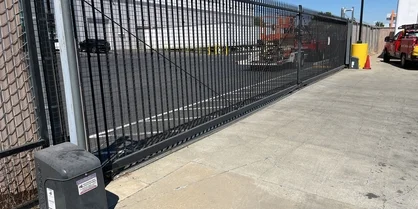
When developing a strong security plan for a business, it’s easy to focus first on indoor measures like alarms and cameras, even though real protection begins at the perimeter. Automatic gates aren’t just for homes; they play a serious role in commercial security because they do far more than add convenience. They create a controlled boundary that discourages unwanted entry and keeps access clearly managed, which matters most when your property needs to stay secure from the outside in.
Choosing an automated entry system means you’re not only improving daily access but also strengthening your asset protection, regulating who comes and goes, and presenting a more professional site, especially when supported by dependable automatic gate repair and installation. You’ll get the most value from that investment and strengthen your overall security posture when you understand where automatic gates have the greatest impact.
Automatic Gate Systems in Business Security Plans
An automatic gate installation forms a powerful part of a business security plan, especially because it doesn’t function in isolation. Acting as the first line of defense, the gate limits access before anyone reaches your building, which becomes even more critical when your site has steady traffic, valuable assets, or sensitive information that needs protection.
Modern automatic gates can also be equipped with added security functions, which strengthen control at the perimeter without turning the gate into a standalone tool. Features such as keypad entry, intercom screening, and integration with video monitoring shift the gate’s role from a basic barrier to a managed access point, as entry is no longer simply blocked or allowed but is verified and recorded.
For a deeper look, read “What Are the Benefits of Automatic Gates for Business Security?” today.
Automatic Gates and Automatic Gate Operators for Controlled Access
The primary role of an automatic gate in a security plan is to control who enters and exits, and that control becomes reliable when paired with well-matched automatic gate operators. Unlike manual gates that can be left open, misused, or overlooked during busy periods, automatic gate openers keep access consistent by restricting movement to verified users, whether entry is approved from a security station or enabled through trusted remote access.
Automatic gate openers reinforce that boundary by physically preventing unauthorized vehicles or pedestrians from slipping through, since no one passes unless they have approved access. With all traffic funneled through a single monitored point, each entry becomes deliberate and observable, which reduces the weak spots that fences or manual gates can’t address as effectively.
When an automatic gate is connected to video surveillance, the access record becomes stronger because staff can visually confirm who is requesting entry before granting it. In that setup, the gate serves more than a mechanical purpose; it becomes part of a broader tracking and verification process, supporting a security plan that stays organized, accountable, and current.
Automatic Gate Openers as Part of Coordinated Site Security
Effective security depends on systems working together rather than operating as separate layers, which is where automatic gate openers add real value. Through gate automation, the main entrance can be coordinated with cameras, alarms, or other on-site protections, so the gate contributes to a unified security structure instead of functioning as a single-purpose device.
Automatic gate systems can integrate with smart business security platforms, allowing access control, monitoring, and response tools to be managed through one operational view. When multiple security functions are visible in the same place, teams respond faster and with less confusion, because they aren’t switching between disconnected controls during high-attention moments.
Once automatic gates and their openers operate in sync with the rest of your security framework, they do more than restrict entry. They help the site react appropriately to real situations, whether that means securing the perimeter quickly during a threat or enabling controlled access when support is needed, which makes the entire property safer through coordinated, perimeter-first defense.
Where Automatic Gates Make the Biggest Security Impact
Automatic gates deliver their strongest security value at a business’s main entry and exit points, where access decisions happen in real time, and traffic is hardest to manage. An automatic gate for driveway use is especially effective for companies that need to regulate vehicle movement throughout the day, which is why it fits naturally in settings like logistics hubs with fleet activity or large offices with employee parking. These high-use areas are where a gate’s presence becomes most meaningful, because it establishes control right where your property is most exposed.
Beyond managing entry, automatic gates influence how a site is perceived and how reliably it operates, since a well-designed gate signals order, safety, and attention to detail the moment someone arrives. The benefit isn’t limited to keeping unauthorized access out; it also helps create a structured environment for employees, clients, and confirmed visitors, which is why the sections below focus on the locations where gate installation tends to make the clearest difference.
Read “Why Automatic Gates Improve Perimeter Safety for Commercial Properties” for more.
Gate Installation for Perimeter Protection and Commercial Entry Points
A well-planned gate installation strengthens the most vulnerable part of any property, the entrance, by turning an open boundary into a controlled checkpoint. In commercial settings, front access points stay active all day, so security has to remain firm without disrupting movement, which is exactly where automatic gates prove their worth. By maintaining consistent control at the perimeter, the system keeps the site protected even during peak flow, since access isn’t left to chance or manual follow-through.
Gate installation also shapes first impressions in a way that supports security goals, because an entry that looks intentional and well-managed communicates professionalism before anyone steps inside. When the gate aligns with the property’s overall layout and exterior design, it reinforces the idea that the business is organized and secure, which visitors notice immediately.
Many commercial sites benefit from automatic gates, though they are especially impactful in environments where perimeter control and predictable movement matter every day, such as:
- Manufacturing plants and industrial facilities
- Warehouses and distribution centers
- Corporate office parks and campuses
- Self-storage facilities
- Multi-family residential communities
Automatic Gate for Driveway Access and Vehicle Flow Control
Managing steady vehicle movement can be challenging for businesses that rely on daily deliveries, staff parking, or frequent visitor traffic, which is why an automatic gate for driveway access becomes a practical security anchor. Whether the property uses a swing or sliding door configuration, the purpose remains the same: to keep the entry orderly and secure while preventing uncontrolled access, especially during peak activity.
A driveway gate also supports smoother traffic flow during busy periods because the system is built for consistent opening and closing cycles, which reduces bottlenecks without weakening perimeter control. Authorized vehicles pass through efficiently, while access stays centralized and monitored, creating a balance between movement and restriction that’s hard to achieve with an open driveway alone.
With remote operation in place, security staff and gate operators can oversee arrivals, deliveries, and visitor access without needing a physical presence at the entry point, which keeps control unified across the site. That centralized oversight helps the driveway stay secure and functional at the same time, because entry remains deliberate, visible, and managed according to your operational needs.
Reliability of Automatic Gates Over Time
Adding an automatic gate to your security plan comes with one simple expectation: it should perform flawlessly every time you need it. When a gate hesitates, fails to open, or won’t close on command, safety issues can follow, and daily operations start to suffer. How reliably your system performs over the years depends largely on two things: how well it’s installed from the start and how consistently it’s maintained after. That long-term durability is what experienced professionals design for, building systems that handle constant use and stay resilient through changing weather conditions.
To keep your gate automation running smoothly, address issues before they arise. Regular maintenance does more than preserve performance; it ensures every component continues to operate as intended and reduces the risk of sudden breakdowns. Even with a well-maintained system, though, a clear emergency repair plan matters because unexpected issues can still happen. A gate remains dependable only when its maintenance is consistent, which is why the next section breaks down the routine service that strengthens performance, and the role emergency repairs play in keeping everything moving without interruption.
Want to see how gates discourage threats in the first place? Read “Automatic Gates as Deterrents: How They Influence Criminal Behavior.”
Gate Maintenance Needs That Affect Automatic Gate Systems’ Performance
The performance and lifespan of an automatic gate system depend heavily on proactive maintenance, especially as time passes. Mechanical parts naturally wear down, electrical connections can loosen, and alignment may drift as the ground settles or the gate cycles through repeated use. Weather adds even more pressure to the system, since extreme heat, heavy rain, and cold conditions can speed up wear on motors, sensors, and moving components, making routine inspections essential for long-term reliability.
So, how often do automatic gates need repair or maintenance? While consistent upkeep reduces the need for repairs, professional servicing is still recommended at least once or twice a year, depending on usage and site conditions, including the demands placed on swing gate operators. During these visits, a qualified technician runs a full set of checks and calibrations to confirm everything is operating correctly. Small issues get spotted early through this process, which helps prevent full system failure and protects you from surprise downtime or costly emergency calls later.
A scheduled maintenance plan is the most effective way to protect your investment, because it keeps performance steady and catches wear before it becomes damaged. Below are common tasks typically performed during a maintenance visit and what each one is meant to accomplish:

Automatic Gate Repair and Operational Continuity in Security Use
Even with regular maintenance, automatic gates can still fail because of accidents, harsh weather, or worn parts, which makes fast, dependable repair support essential. A gate left open compromises security, while one stuck shut disrupts access for employees, customers, and deliveries, so routine checks help prevent issues early and emergency repairs restore protection quickly when they happen. Peace of mind comes from knowing your gate will work when needed and that expert help is ready if it doesn’t, keeping your security plan strong instead of letting it become a weak link.
Adding automatic gates to your business security supports your site in several practical ways, acting as a solid barrier that discourages unauthorized access while keeping vehicle movement controlled and your perimeter safer. Their value holds up over time when you stay consistent with regular maintenance and handle repairs quickly, since those two habits keep the system reliable and your operations running without interruption. As you review your security setup, it helps to see automatic gates as a core layer of protection rather than an optional upgrade, especially when you want a solution that strengthens safety day after day. If you’d like to explore how automatic gates can improve your security, reach out today to schedule a consultation.
For businesses in the Sacramento area, partnering with a trusted specialist makes all the difference, which is why many property owners rely on R&S Overhead Doors & Gates of Sacramento, Inc. for professional installation, maintenance, and repair. Our team understands the demands of commercial sites and delivers solutions built for high-traffic performance, dependable access control, and long-term durability. Contact us today or give us a call to get a tailored quote and schedule your service.
Frequently Asked Questions
Can automatic gate systems be integrated with smart business security platforms?
Most modern automatic gate systems integrate easily with broader business security platforms, letting you manage gates, cameras, alarms, and sensors from one dashboard while enabling remote control when you’re off-site.
What automatic gates security functions matter most in a business setting?
Strong access control and seamless integration matter most for commercial sites, since keypads, card readers, and authorized credentials block unwanted entry while links to surveillance, alarms, and entry logs provide visibility and faster response when issues arise.
Why are gate maintenance and automatic gate repair essential for security continuity?
Maintenance prevents failures that create security gaps, and rapid repairs restore protection the moment something breaks, because a gate only supports security when it operates correctly day after day.
What types of businesses benefit most from automatic gates in security plans?
Industrial facilities, warehouses, distribution centers, corporate offices, and large residential or mixed-use complexes benefit most from automatic gates, especially when daily operations require tight control of vehicle access and a safer perimeter for people, assets, and restricted areas, as emphasized by the US Forest Service.
How do automatic gate openers limit unauthorized vehicle or pedestrian entry?
Gate openers require valid credentials, such as remotes, keypad codes, or access cards, before allowing entry, stopping walk-in or drive-in access from anyone who isn’t approved.
What causes automatic gate systems to malfunction in business environments?
High daily usage, harsh weather, and impact damage can trigger failures, though skipped maintenance is the most common cause because small issues grow into major breakdowns over time.
Are automatic gates with automatic gate operators high maintenance for commercial sites?
They aren’t high-maintenance, but they do require routine service to remain reliable in busy environments, making them a practical security upgrade when maintenance is consistent.
Do automatic gates improve privacy for businesses with restricted areas?
Yes, especially with solid or opaque panels that block sightlines and control entry at the same time, giving restricted zones more privacy than fencing alone.
What is the main disadvantage of automatic gates in a business security setup?
They rely on power and ongoing maintenance, so outages without backup power and neglected upkeep can prevent the gate from operating when access and security are critical, as emphasized by NEMA in its guidance on backup power systems.
How does gate installation for an automatic gate for the driveway support peak-hour traffic control?
A properly installed system uses fast operators and long-range access readers to move authorized vehicles quickly, keeping traffic flowing smoothly during the busiest periods.